My Experience
Swing has the enormous benefit of having a very relaxed and generous practice culture. A lot of people at all levels are open to and interested in practicing.
I’ve been graced with the opportunity to practice in some very good scenes (Barcelona, Vilnius, Seoul, Seattle, Atomic, Philly, SF Bay, Tokyo, ) that have large communities. In smaller communities, there are always people who want to practice, in fact, they are at times even more enthusiastic (Phoenix, Portland, Tokyo).
I’m writing this a leader and a male. I can’t speak to other perspectives so I’ll write from my own experience. Hopefully other demographics can find something useful to apply to their own situations and experience.
I believe I have 3 big advantages in finding a practice partner.
-
I’m a leader. There are generally more leaders than followers pretty much at every level.
-
I actually just want to practice. Many men can’t (won’t) stop bringing their libidos into spaces where it doesn’t belong and isn’t welcome.
-
I prepare for practice.
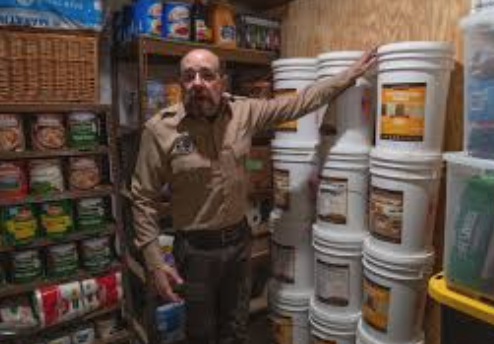 (Me with all my dance content prepped.)
The feedback I’m getting is that many other leaders don’t prep. The just show up. Which is a good first step, but being prepared makes me a better long term partner for training, even if they’re a better dancer overall. Most people don’t prep at all and that’s a big plus for partners and even when they’re a few steps out of my league it helps even the gap.

Two other things.
- I treat practice as a gift, not work. More on that later.
- I’m good. This is a positive and a negative. A positive because I have a lot to bring the to the table. A negative because I have fewer people I’d consider as possible practice partners. A positive because I get to work with some of the best. A negative because they’re often also pretty dang busy.
Finding a Partner
I’ve when arriving, this is what I do when I go to each scene.
Find a Community
I ask scene leaders if there are any practice groups / serious communities. This doesn’t always yield results, but one community, everyone I asked pointed to the same group. And it was frickin awesome. Some groups are very hesitant to let outsiders in, and that’s totally understandable! They have a good thing going and new people can be incredibly disruptive. However, it is very good to know who’s in the group so you can approach them, but without scaring them. It is like approaching a cat. Just be around for a while and after they establish you’re not a threat or crazy, they’ll warm up to you. Once they know you’re interested in joining the group, an invitation will eventually follow. Note, this can take 6 months to a year. Think of it like old school martial arts training where you need to sit on the doorstep to prove your dedication. Once you’re part of the group, you’ll have no shortage of practice opportunities.
Ask For Recommendations (Networking)
I ask people I want to practice with but have no relationship with yet, if they know anyone who wants to practice. This is a polite way of giving them the opportunity to volunteer themselves without putting them on the spot. Ego is a thing, and some people would consider it an insult if I asked to practice with them. Sometimes it would be approprite since they’re so frickin good, other times, maybe not. Either way, in my case, I ask scene leaders or pros if they know anyone who’d want to practice. About a third of the time yes say… “Well ya. Me.” The other times, they actually have could recommendations. Also, they know I’m open to it and that door may open down the road or they’ll have some they’ll want to suggest who could be a good fit.
Social Dancing
I go to social dance and if there’s a good dance with someone and I like their vibes, I’ll ask them if they want to try a practice. 90% yes rate.
Safety First
Find your own way about this, but be sure to keep their perceived safety in mind. When discussing place, offer a neutral location that they know and feel safe in. If they’re time pressed or risk adverse, suggest meeting at a relaxed social dance and just dancing multiple songs with a loose objective.
Emphasize just trying one to see how it goes. You’re taking the relationship from an acquaintance to a potential practice partner. A practice partner can become quite a profound relationship, so approach it as such and take it slow. This is both for their safety and yours! Maybe it doesn’t go as well for you and don’t want to continue to practice, but if you’ve set the expectation of lots of practice… this can hurt their feelings and your credibility in the scene when they talk about it.
Also, don’t ask for a long practice at first. I like 1.5 to 2 hours for the first practice. But also remember, short and sweet is better than long and never.
Practice Prep
I say at the beginning, “Do you have anything in mind you’d like to practice? If not, no worries, I’ve got a few things prepped.” The answer is usually no. Plan and prep, but don’t be too attached to it. If they do bring something, work on it with enthusiasm and focus.
So be sure to prep. Gotta prep. Once you develop system for this, it actually isn’t hard at all. But at first it will seem like work. Work before you practice so you can have a fun practice.
Preparing Everything But the Dance Stuff
We’ll get to the actual dance material in minute, but let’s talk about the other things first.
Food
Bring food for yourself. I can’t tell you the number of times I’ve been stricken my hunger while practicing and a chocolate bar saved my ass.
Also bring snacks to share. Omg bring snacks no joke. Also, when sharing them not only is a nice thing to do, but you help your partner stay in a good place. Maybe you both get excited and want to extend practice. Having a snack to share will help that. Many people get hangry. Also, you get bonding points when you eat with someone. Humans share meals trust the other. It’s good for partnerships.
Keep in mind, they should be prepared and bring their own snacks. But we’re human. And don’t be cooking meals for them if they aren’t bringing something equivalently valuable to the table. This is an over extending and ruins the 50/50 balance. You should offer to share your food because it’s kind, a better practice result for you, and it’s good for your partnership. You’re not feeding them. Bring extra just in case and if needed, you’ll be glad you have it.
Music
Download the music on both your computer and phone. Don’t rely on wifi or network. If you want to practice Lindy, download 3 playlists on Spotify of different tempos. Listen to them ahead of time. Have a balboa and a shag playlist prepped too ;)
Sound
Bring a speaker. Bring bluetooth headphones in case you need to practice in a shared space or be quiet because of neighbors. Keep them clean 🫧 for sharing.
Shoes
Bring them. I usually bring two pairs if I don’t know what I want to practice or what the surface is going to be like or if I feel like shlepping.
Clothes
A second shirt at the least. You’re gonna sweat.
I’ll often dress well to practice because there’s a chance of filming and then publishing. If I have a partner that likes to stretch on the floor or do yoga or some shit like that, or I want to do that, I’ll bring sweats too.
For air practice 100% dress for safety and activity. Looks are secondary.
Filming
I film practices to review tape. Wow, talk about anachronistic language. Anyway, this is much easier to do if you have storage free on your device and a tripod.
Power
Charge your shit.
Develop a system for it if you’re bad at it. Every night my computer plugs into the wall and I have a splitter cord that connects from my computer and plugs into my phone and headphones.
Also, bring a strong backup battery with plugs for ucb c and lightning. Its saved me multiple times and my partner once or twice too!
Preparing the Dance Stuff
This can be really overwhelming. But think of this as a system to build gradually. It is a system that holds the potential energy of stored creativity, yielding the fruit of quality practice.
I keep a few files to prep for practice.
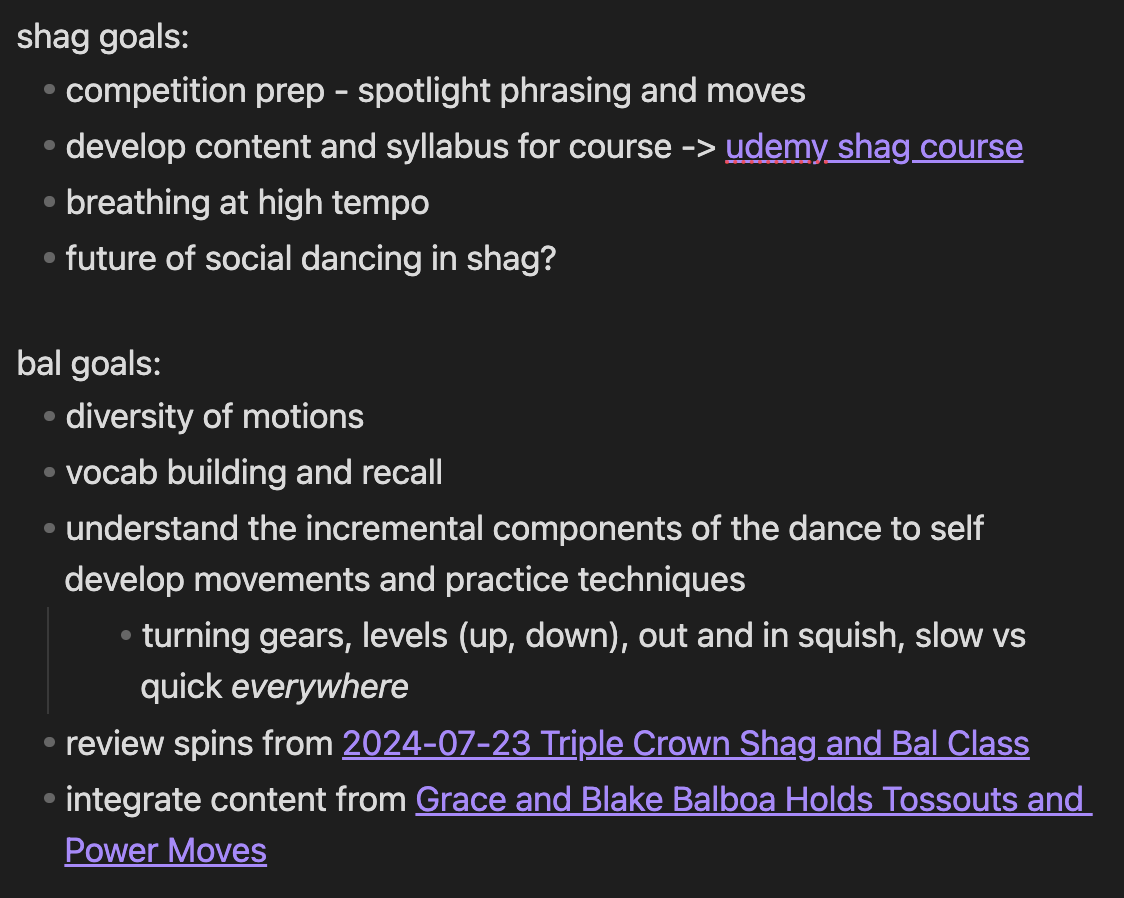
- One a list of “long term” goals
- Files from notes of classes I’ve taken and the relevant notes
- A log of practices with associated quick notes of what we did
If there’s a specific move I want to learn (steal) from someones performance that’s posted on Instagram or YouTube, I download the video onto my computer and bring it. It wastes SO MUCH time fiddling with playback. On your computer is way better.
Long Term Goals
The long term goals are my “north star”. Anytime I’m not sure what to prep, what I should be practicing or working on, I take a look at those for guidance or inspiration.
 #### Classes
The classes you have taken are a great source source of reference and sometimes inspiration. Sometimes a move from a class will resurface in my body and maybe it won't go all that well. Well... I have video and notes to refer back to and it smooths the practice out. I've also found often the person I'm working with will notice something I didn't and it will add value to that class again. Also revisiting forgotten classes is much more efficient than looking for new material.
#### Classes
The classes you have taken are a great source source of reference and sometimes inspiration. Sometimes a move from a class will resurface in my body and maybe it won't go all that well. Well... I have video and notes to refer back to and it smooths the practice out. I've also found often the person I'm working with will notice something I didn't and it will add value to that class again. Also revisiting forgotten classes is much more efficient than looking for new material.
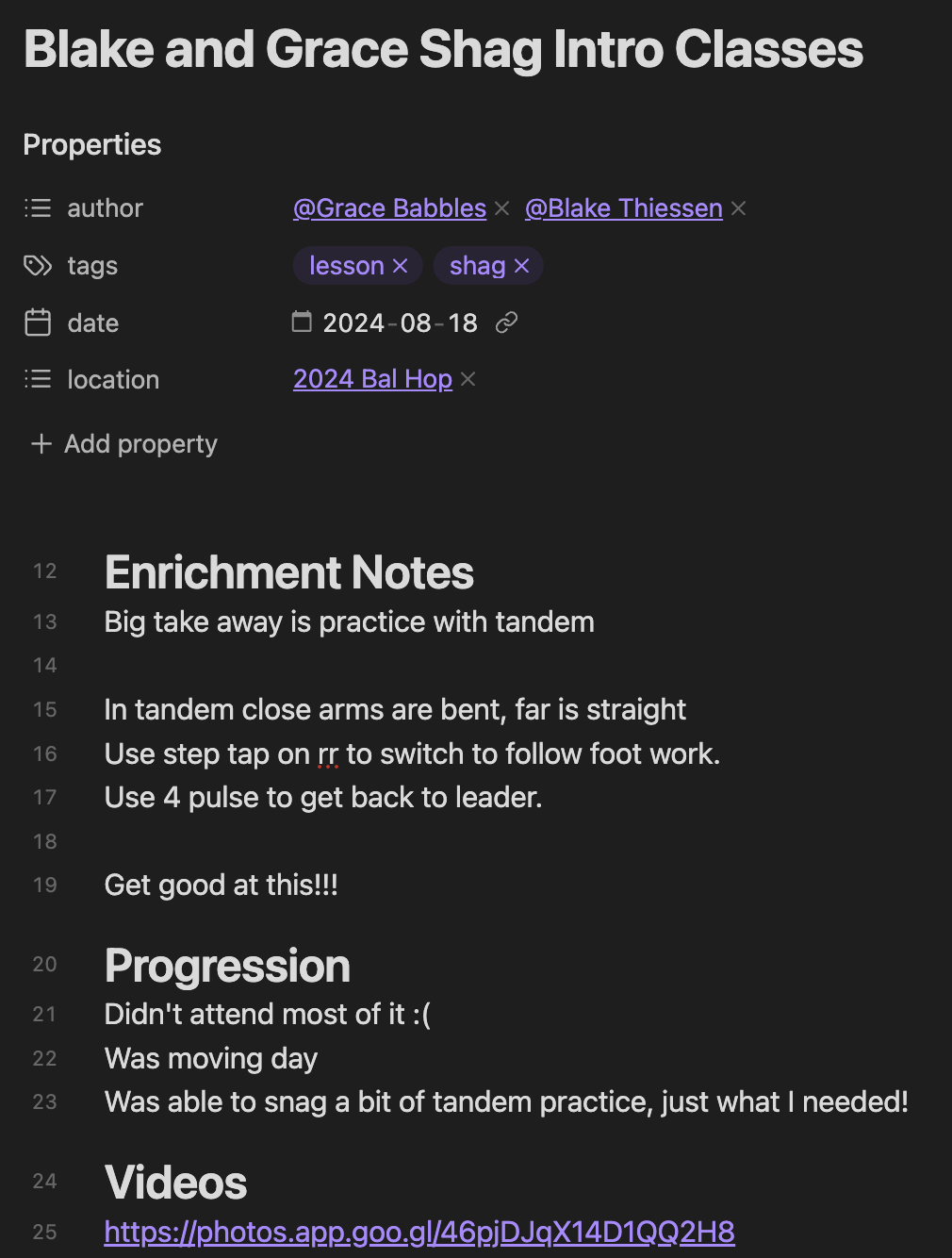
Here’s my template. Note it has author, tags, date, and location meta data. This is very useful for cross referencing for you can’t remember exactly the class but you know it was at x location and y teacher.
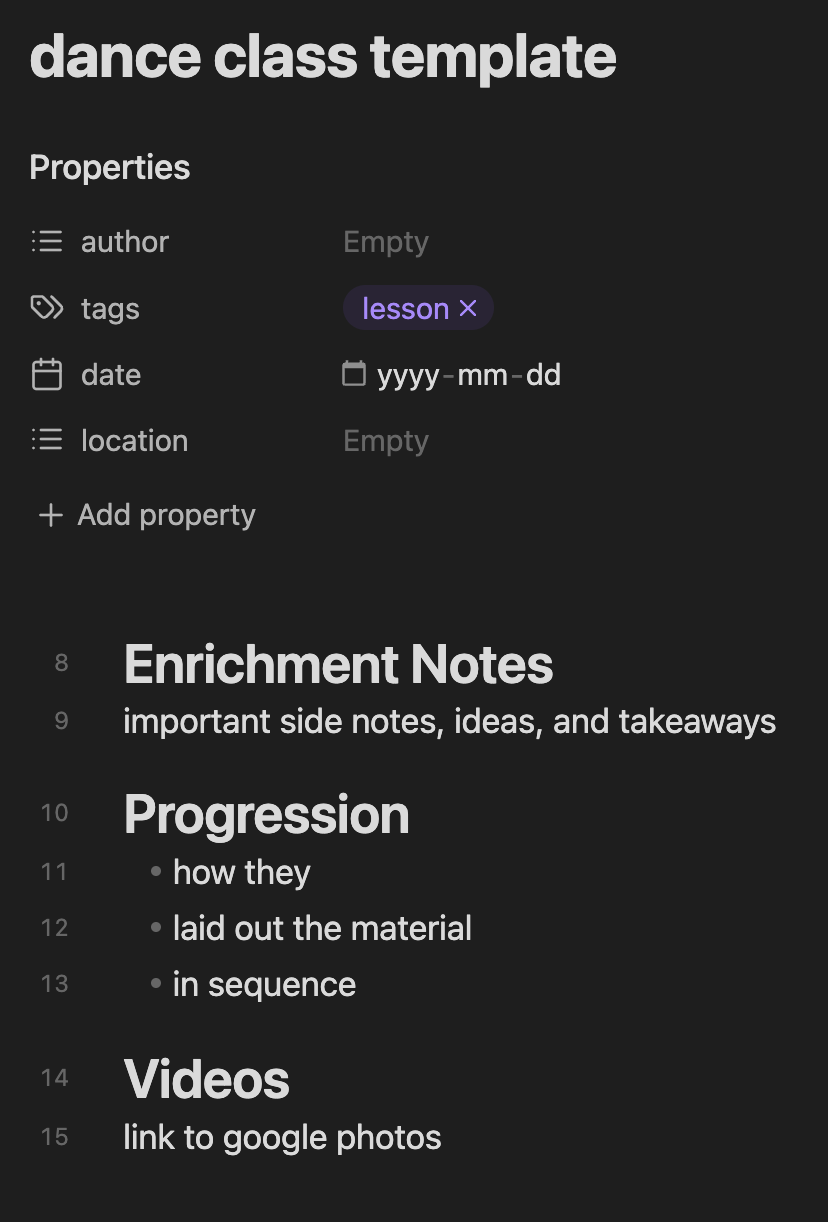
And here’s a filled out one that’s short. My other ones a bit long to share.
Dance Log
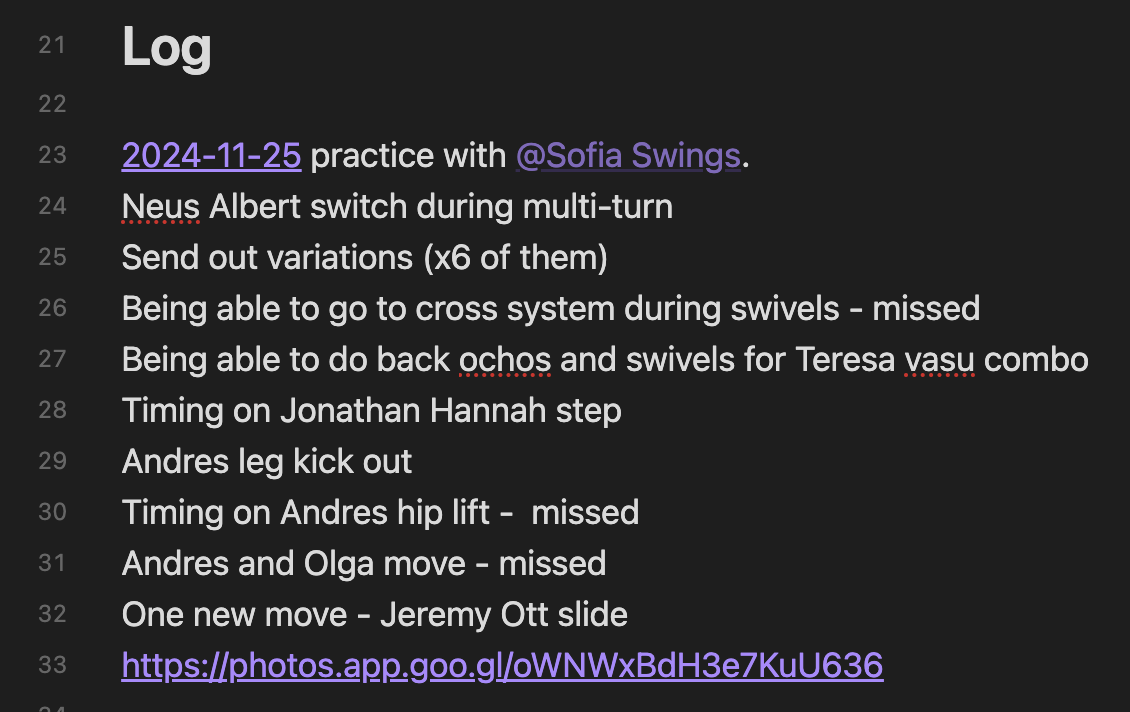
I’ve got a log with some quick notes for practices. This reminds me what I wanted to work on when I show up for practice. Also, its a little memory trigger for the next practice of what we did and might want to work on again. After practice, I update it. Attempting to recall what we worked on is good for encoding the practice information into my brain.
 ## Head Space
Getting the right mental headspace worked wonders for me with practice. I've had a lot of bad practices. Terrible. Tears, yelling, shouting, anger. Uff. No more thx.
### Vibe
In contrast to the "work" of prepping, practice is fun! Smile and laugh. Keep it light hearted. This is natural for some people. It's becoming natural for me. I used to have a tendency to bite and hang onto something I'm trying to learn. Like if I squeeze it harder it won't get away and I can force it into my brain faster. Neuroscience shows that fun and play are much faster for learning. It just doesn't feel that way to me at first because I thought learning should be focus and effort. But when having fun and playing, a four hour practice flies by. I can barely get to 1 hour when grinding. Very few people like being around frustrated angry people.
## Head Space
Getting the right mental headspace worked wonders for me with practice. I've had a lot of bad practices. Terrible. Tears, yelling, shouting, anger. Uff. No more thx.
### Vibe
In contrast to the "work" of prepping, practice is fun! Smile and laugh. Keep it light hearted. This is natural for some people. It's becoming natural for me. I used to have a tendency to bite and hang onto something I'm trying to learn. Like if I squeeze it harder it won't get away and I can force it into my brain faster. Neuroscience shows that fun and play are much faster for learning. It just doesn't feel that way to me at first because I thought learning should be focus and effort. But when having fun and playing, a four hour practice flies by. I can barely get to 1 hour when grinding. Very few people like being around frustrated angry people.
Be on good behavior, be clean, be confident, be clear about what you want and your boundaries, but keep it light hearted and joyful.
In the same way I create a positive experience when social dancing, I create it when practicing. Smile, laugh, play, have a good time! Dance is fun. Learning is fun. Moving is a gift.
Keep It Moving
We want to dance. We want to move. I.e. lets say I want to learn a move from a group class I took. As a leader it’s gonna take me 5 times longer than a follower. So I download the video recap, try it solo, visualize it, try it socially and do it terrible, and only after I’ve done that do I “learn it” with my practice partner. The point of working with a practice partner for moves is to workout the kinks and get good reps, not to waste dance time while I fumble over my feet.
We Are Partners, Equals
Even when I’m practicing with someone who’s not at my “level”, they are still a collaborator. An unbalanced power dynamic in practice will show up in the dancing and the creative process. This is not good.
Both Student and Teacher
I’m two halves both student and teacher. I try to be the best for each side. As only a student, it’s quite easy to just show up and let the teacher do all the work. As a teacher, maybe you stop caring about what is fun or interesting and only focus on what’s needed. As both at the same time, I have the advantage of knowing both minds. When the student gets bored, the teacher moves on. When the teacher knows how important to get some reps of a particular move might be, the student focuses extra hard.
Divergent and Convergent
Divergent and convergent, some practices are for opening doors, seeing what’s behind them. The fun of discovery of new moves or just dancing and seeing what happens. Other practices are for a purpose. A technique, routine, a video, competition, and for those we start with the material we generated from divergent practices and converge on the best ideas for the purpose.
Stream of Consciousness Practice Example
Sofia and I had been practicing multi turns for a few practices and they were good enough, but there was a bit of a question mark on footwork for a specific move I had brought to practice. So, who turns really well? Alice. Ah, I took a class from Sam Chan and Alice at HJJ in 2023 that has multiple turns. Let’s pull up the class notes. Okay… Nothing there let’s look at the video recap. Ah! There’s a slight pulse on 2 for the turns. A slight bias you could even say on the rotational multi turns. We aren’t doing that. Let’s add it in. Practice that for 5 to 10 minutes. What about turns the other direction? Is it the same? Experiment for 5. Okay, let’s dance now and integrate the pulse into the multi turn. Dance 3 songs. But what about non rotational turns? Theory is that we don’t add that up pulse. It’s more flat. Okay, let’s try it (5 minutes). Let’s look at Blake and Alice performance to confirm. (3 minutes) Seems confirmed. Let’s dance again focusing on different types of turns and applying the up pulse to the rotational multi turns and a more linear feeling to the traveling multi turns. 10 to 15 minutes. That was the convergent part. Brain is tired of focusing. While dancing there was an interesting multi turn combo. Pause from explicitly focusing on the pulse technique and then play around with finding that cool move again. After “play time” revisit the list prepped for practice or go back to the move from the very start.
Tools
- I have a Google pixel 5 explicitly for bulk filming. Google has free unlimited cloud storage for pixel 3 to 5. For “professional” filming for projects I’m looking into an iPhone for that sweet sweet cinematic mode.
- Notes, I use Obsidian with sync to store, organize, and access my practice notes on my computer and phone.
- Tripod, https://www.dji.com/lt/osmo-mobile-6 with DJI OM Grip Tripod. I’m looking into the https://pocket-tripod.com/ for portability and convenience.
- Computer
- Sound - JBL Charge 3 - https://www.thepackablelife.com/travel/gear/reviews/jbl-charge-3. Its too big while I’m traveling, living out of a suitcase so I’m relying on just the headphones. Currently looking for a speaker that works for traveling.
- Power pack - anything by anker is good.
- Shoes, loafers for Balboa, generalist leather shoes for lindy/bal/shag, and fuegos for lindy hop / bad floors.
Conclusion
Effective dance practice isn’t just about showing up—it’s about preparation, respect, and creating a fun, safe environment. By treating practice as a collaborative gift, you can form meaningful partnerships, improve your skills, and truly enjoy the process. Whether you’re in a big or small scene, attitude and effort can make all the difference. Happy dancing!